

 Français



Nov
The Fountain of Youth: Why Do We Lose Collagen, and How Can We Slow It Down?
Have you ever noticed how children’s skin bounces back when you gently press it? Much of that resilience comes from one protein: collagen. A true structural framework for the skin, collagen provides support, strength, and firmness. Over the years, skin gradually loses its elasticity, becomes thinner, and fine lines begin to appear. Is this an inevitable consequence of aging or the result of our daily habits? A little of both—and that is actually good news, because some of this loss is within our control.
1. Collagen: The Master Architect of Your Skin
Collagen is the most abundant protein in the human body. It accounts for approximately 30% of the body’s proteins and nearly three-quarters of the skin’s dry weight. It forms a network of fibers that keeps tissues firm and structurally supported.
In the dermis, specialized cells called fibroblasts produce collagen, elastin, and hyaluronic acid. They create chains of amino acids rich in glycine and proline, which twist together in groups of three to form a highly resilient triple helix. One key step involves converting some of the proline into hydroxyproline, which stabilizes this structure. This reaction depends on an enzyme that requires vitamin C. This helps explain why a severe vitamin C deficiency, known as scurvy, causes skin fragility and, in particular, impairs collagen synthesis.
Of the 28 identified types of collagen, type I is the most abundant in the skin, accounting for approximately 80% of its collagen and providing strength. It works alongside several other types, including type III, which is more flexible and particularly abundant in young skin and during wound healing. As long as this network remains dense and well organized, the skin stays smooth and resilient.
2. Natural Decline: What Happens as We Age?
Collagen loss begins in adulthood. It is estimated that, starting at around age 25, the skin loses approximately 1% of its collagen each year. (1)
Several mechanisms contribute to this process. Fibroblasts, the specialized cells found in the dermis, age and produce less collagen. Meanwhile, enzymes known as matrix metalloproteinases (MMPs), which break down collagen, become more abundant and active. The remaining fibers fragment and lose their organization, further impairing fibroblast function and creating a vicious cycle. (2)
In women, menopause and declining estrogen levels accelerate this process. The skin can lose up to 30% of its collagen in the five years following menopause, after which the decline stabilizes at approximately 2% per year. (3)
The result? The skin’s supporting structure weakens, the skin becomes thinner, and it takes longer to return to its original shape after facial expressions or stretching.
3. The Exposome: Five Enemies of Your Collagen Fibers
Biological aging is not the only factor at play. The exposome—the collection of non-genetic factors, including environmental exposures, behaviors, and lifestyle habits that affect the skin—plays a major role.
- Sun exposure: the number-one enemy. UVB rays penetrate the epidermis, while UVA rays reach the dermis. UV exposure generates oxidative stress and activates MMPs, which break down collagen fibers. This process is known as photoaging and is responsible for a significant proportion of visible facial aging. (2)
- Smoking and pollution. Smoking reduces blood flow to the skin and increases the production of MMP-1, an enzyme that breaks down collagen. (4) Air pollution exposes the skin to fine particulate matter, which has been associated with increased pigmentation and wrinkles. (5)
- Sugar and glycation. Excess glucose binds to collagen fibers, forming advanced glycation end products (AGEs). These fibers become stiffer, more brittle, and harder to renew. This process accumulates with age and accelerates when blood glucose levels are frequently elevated, causing the skin to lose flexibility.
- Stress and lack of sleep. Cortisol, the stress hormone, inhibits collagen synthesis. This also helps explain why prolonged corticosteroid treatment can cause the skin to become thinner.
- Nutritional deficiencies. The body needs vitamins and trace minerals to function properly. Without sufficient vitamin C, iron, zinc, copper, and other essential nutrients, fibroblasts lack the resources they need to produce healthy collagen.
4. How Can You Recognize Collagen Loss?
Several signs may indicate collagen loss: thinner skin, the appearance of fine lines followed by more pronounced wrinkles, sagging around the jawline and facial contours, and skin that takes longer to return to its original shape when gently pinched. Facial features may also appear more tired.
5. Your Action Plan: Slow Collagen Loss and Support Its Production
The good news? We cannot stop time, but we can slow collagen loss and support the body’s natural production. Here are a few practical steps to help:
- Protect your skin from the sun year-round. This is the best-supported anti-aging measure. In a four-and-a-half-year Australian study, participants who applied sunscreen daily showed no detectable increase in skin aging, unlike those who used it only occasionally. (6) Keep in mind that SPF primarily measures protection against UVB rays. To protect against UVA rays, which reach the dermis and affect collagen, look for a broad-spectrum sunscreen. For a more responsible choice, also consider the environmental impact of your sunscreen.
- Choose well-documented active ingredients. Look for skincare products that have been tested on skin and supported by evidence. Many ingredients are available, including signal peptides, which mimic the skin’s natural repair signals and encourage fibroblasts to produce collagen. Their results have attracted considerable interest. Vitamin C, which plays a direct role in collagen synthesis and helps neutralize free radicals, is another essential ingredient for helping prevent premature signs of aging.
- Nourish your skin from within. Prioritize high-quality protein, vitamin C-rich foods such as citrus fruits, bell peppers, kiwis, and berries, and zinc-rich foods such as seafood, legumes, and nuts and seeds. Limiting refined sugars can also help reduce glycation.
- Prioritize restorative sleep. Follow your body’s natural day-night rhythms. Sleep is when the skin repairs and renews itself. Melatonin, a hormone that regulates the body’s biological clock and helps promote sleep onset, also acts as a natural antioxidant for the skin. Learn more about restorative sleep.
Collagen in skincare: what does it really do? An intact collagen molecule is far too large to penetrate the skin. The commonly cited 500-Dalton rule suggests that molecules generally need to weigh less than approximately 500 daltons to pass through the skin barrier. (7) When applied in a cream, collagen therefore remains primarily on the skin’s surface, where it helps hydrate and smooth the skin. Smaller collagen peptides can penetrate more readily. The key strategy is to help the skin produce and preserve its own collagen.
6. Our Selection: Your Collagen Skincare Routine
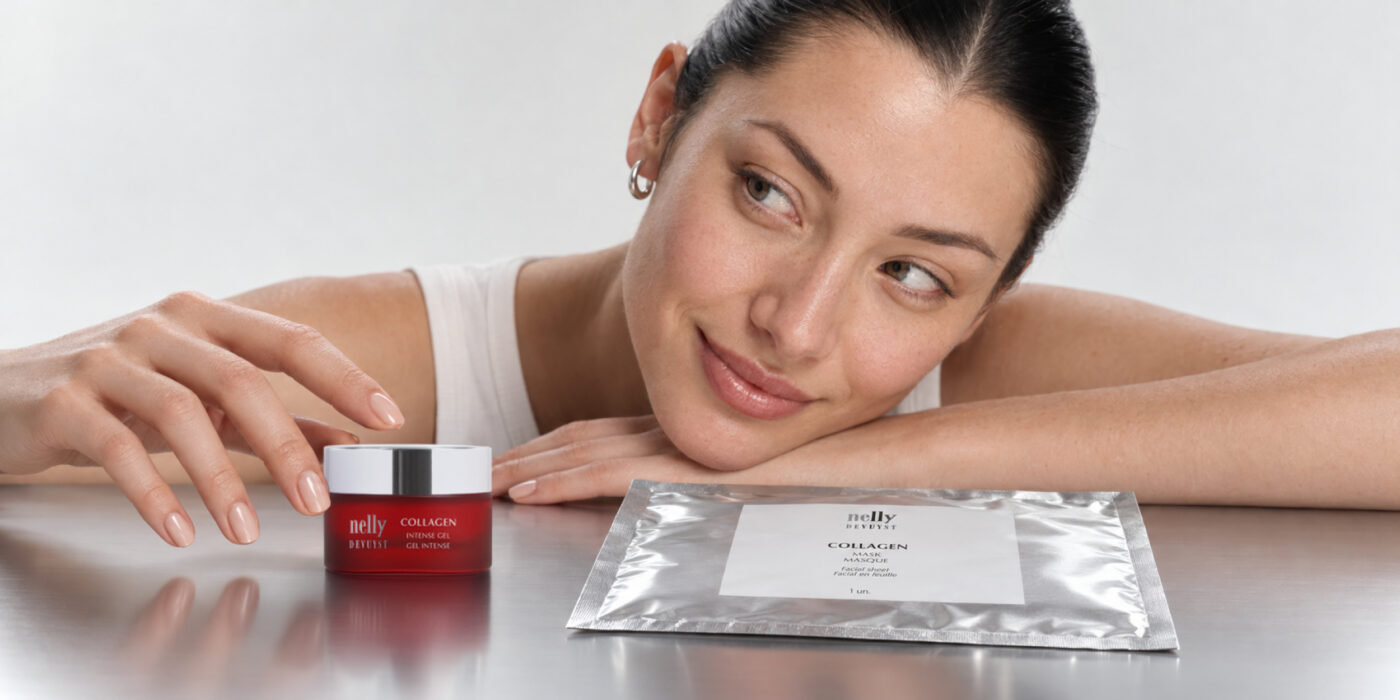
The Nelly De Vuyst skincare products featured below are designed to help the skin preserve and produce its own collagen while keeping it hydrated and smooth every day.
Your routine, step by step: To support firmer-looking skin, we recommend applying Intense Collagen Gel in the morning, followed by BioSolar Mineral Sunscreen SPF 30. In the evening, after cleansing thoroughly yet gently with Soft Net Pure Cleansing Cream, apply either Intense Collagen Gel or Lifting Complex Cream. Once or twice a week, we recommend using the Collagen Mask.
Why are these products recommended to help support your skin’s collagen production?
Intense Collagen Gel: Hydrate, Smooth, and Protect
Nelly De Vuyst Intense Collagen Gel is a rich gel-cream designed for mature skin that lacks firmness. It works on several levels:
- Supports collagen production: Its unique formula combines plant-derived exosomes with small, hydrolyzed collagen peptides. This patented technology optimizes their delivery into the skin and stimulates the production of the skin’s own collagen. The formula also contains a stable form of vitamin C (ascorbyl glucoside), which is essential for collagen synthesis.
- Helps limit collagen breakdown: Vitamin E, grape seed oil, and olive leaf extract help counter oxidative stress, while centella helps soothe the skin.
Collagen Mask: Your Weekly Intensive Treatment
The Collagen Mask features the same key ingredients as Intense Collagen Gel in a more concentrated formula, including hydrolyzed collagen peptides, hyaluronic acid, vitamins C and E, and plant-based antioxidants.
During the 20-minute application, the sheet helps limit moisture evaporation and prolongs the skin’s contact with the active ingredients. After removal, the skin feels more hydrated and smoother and looks more radiant. Used once or twice a week, or before a special occasion, it complements your daily skincare routine.
BioSolar Mineral Sunscreen SPF 30: Protect Your Existing Collagen
No collagen-focused skincare strategy is complete without sun protection. UV rays, particularly UVA rays that penetrate into the dermis, are a leading cause of collagen breakdown.
Nelly De Vuyst BioSolar Mineral Sunscreen SPF 30 filters these rays using mineral filters—zinc oxide and titanium dioxide—free from nanoparticles, providing broad-spectrum UVA/UVB protection. Vitamins C and E, along with extracts of ginseng, ashwagandha, and beech buds, help neutralize free radicals generated by sun exposure and pollution. Hyaluronic acid and aloe vera also help hydrate the skin.
Applied every morning and reapplied every two hours during sun exposure, it helps protect existing collagen and preserve the benefits of skincare products designed to support collagen production.
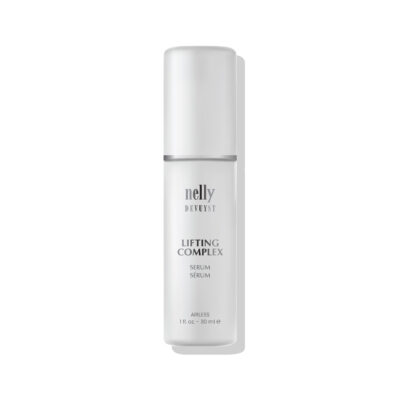
Lifting Complex Cream: Support and Protect with Peptides
Glycation and inflammation can make dermal collagen more rigid and fragile. An effective anti-aging strategy should therefore aim both to support collagen production and to protect existing fibers.
Lifting Complex Cream by Nelly De Vuyst addresses both goals with three peptides. Palmitoyl tripeptide-1 and palmitoyl tripeptide-38 signal the skin to increase collagen production. Palmitoyl tetrapeptide-7 helps reduce an inflammatory messenger that accelerates collagen breakdown and also offers protective benefits against glycation.
At the skin’s surface, marine collagen and hyaluronic acid help retain moisture and form a smoothing, softening film. This makes the cream a valuable ally in supporting skin firmness while caring for its collagen.
In Summary
Collagen is not a fixed, finite resource. By protecting your skin from the sun every day, choosing appropriate skincare products, and maintaining a balanced lifestyle, you can help slow collagen loss and give your skin the best chance of staying firm and radiant for longer.
Frequently Asked Questions (FAQ)
Collagen loss begins in adulthood. It is estimated that, starting at around age 25, the skin loses approximately 1% of its collagen each year. In women, this loss accelerates after menopause and can reach 30% during the five years that follow.
When the skin loses collagen, it loses some of its structural support and becomes thinner. Fine lines become more pronounced, the jawline and facial contours may become less defined, and the skin takes longer to return to its original shape when gently pinched.
Photoaging is skin aging caused by sun exposure. UVB rays are largely absorbed by the epidermis, where they directly damage cell DNA. UVA rays reach the dermis, generate oxidative stress, and activate enzymes that break down collagen. Photoaging is responsible for a significant proportion of visible facial aging.
Glycation is a process in which excess sugars bind to proteins, including collagen fibers. These glycated fibers become stiffer and more difficult to break down. Instead of being replaced by new collagen, they accumulate over time, causing the skin to lose flexibility.
The intact collagen molecule is too large to cross the skin barrier and reach the dermis, where collagen serves as a structural framework. When applied topically, collagen therefore remains primarily on the surface. However, it still provides cosmetic benefits: it attracts and retains water, forms a flexible film that reduces moisture loss, and smooths the skin’s surface. The skin looks more hydrated, feels softer, and appears more even, but these effects are temporary and do not replace lost collagen. Smaller collagen peptides can penetrate more readily and may help promote cellular signaling associated with the synthesis of new collagen fibers.
Several ingredients are used in skincare to support collagen production. Signal peptides can encourage fibroblasts to produce collagen, while vitamin C is essential for collagen synthesis and also provides antioxidant benefits.
Yes. Daily sunscreen use is one of the best-supported measures for preventing premature skin aging. Sunscreen helps limit UV penetration into the skin. Without adequate protection, UVA rays reach the dermis and generate oxidative stress, activating enzymes that break down collagen. To help preserve the skin’s collagen, choose a sunscreen labeled broad-spectrum, as SPF alone primarily measures protection against UVB rays.
Yes. High-quality protein, vitamin C-rich foods such as citrus fruits, kiwis, and bell peppers, zinc-rich foods such as seafood and legumes, and other trace minerals help support collagen synthesis. Limiting refined sugars is also recommended, as they contribute to glycation and collagen degradation.
References
- Shuster S, Black MM, McVitie E. The influence of age and sex on skin thickness, skin collagen and density. Br J Dermatol. 1975;93(6):639-643.
- Fisher GJ et al. Mechanisms of photoaging and chronological skin aging. Arch Dermatol. 2002;138(11):1462-1470.
- Brincat M et al. A study of the decrease of skin collagen content, skin thickness, and bone mass in the postmenopausal woman. Obstet Gynecol. 1987;70(6):840-845.
- Lahmann C et al. Matrix metalloproteinase-1 and skin ageing in smokers. Lancet. 2001;357(9260):935-936.
- Vierkötter A et al. Airborne particle exposure and extrinsic skin aging. J Invest Dermatol. 2010;130(12):2719-2726.
- Hughes MCB et al. Sunscreen and prevention of skin aging: a randomized trial. Ann Intern Med. 2013;158(11):781-790.
- Bos JD, Meinardi MM. The 500 Dalton rule for the skin penetration of chemical compounds and drugs. Exp Dermatol. 2000;9(3):165-169.
*This article is for informational purposes only and does not replace advice from a dermatologist or physician.
Written by
This article was written on October 13, 2026, by Pauline Khoury, Scientific Director, Communications and Development, Dermebio – France.

Pauline Khoury
Scientific Director, Communications and Development | Dermebio – France.
Pauline Khoury holds an engineering degree in Agronomy and a Master’s degree in Biological and Food Sciences. Passionate about skin science and the mechanisms of aging, she has been putting her expertise at the service of the cosmetics industry for over 12 years.
Specializing in skin physiology, she is recognized for her ability to make the most complex scientific advancements accessible and translate them into practical solutions for cosmetics industry professionals. She helps them better understand the actual needs of each skin type and provides tailored recommendations to achieve long-lasting results.
An accomplished speaker and trainer, appreciated for her dynamic and educational approach, Pauline shares a modern vision of beauty in which skin health, personalized skincare, and the art of aging well take center stage, creating an exceptional customer experience.